034 Choosing the right machine for you
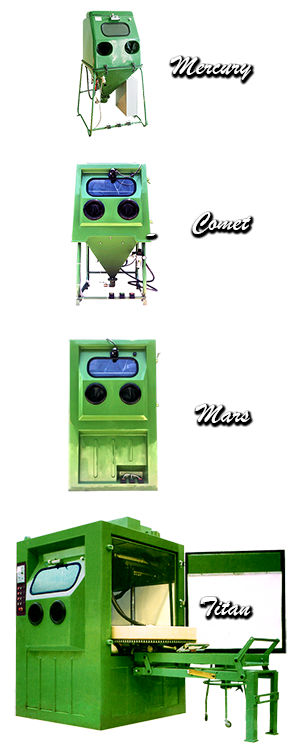
Choosing the right machine
Finding a wetblast machine to suit your needs is not as difficult as you might think
Wet Abrasive Process

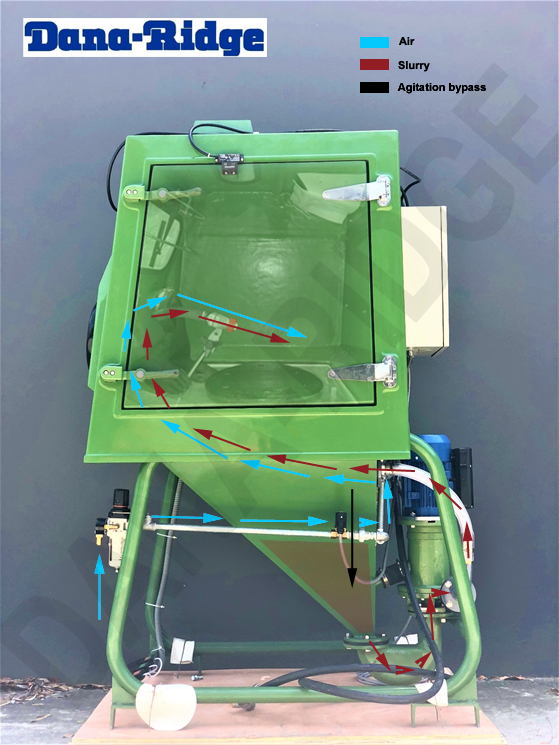
Our wetblast units operate using a similar principle. A thorough mix of water and blast media is recirculated through the process gun where it is atomised using compressed air. The result is a unique combination of properties that allow a wide variety of finishes on a wide variety of surfaces.
Internal cabinet size
Probably the first question is whether the parts you want to blast will actually fit in the cabinet including enough space to maneuver your process gun
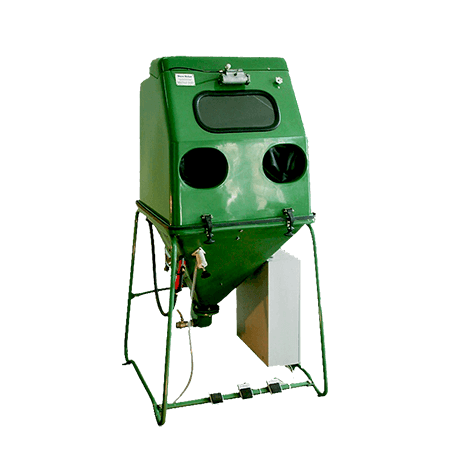
Height above turntable 620mm
Depth (front to rear) 670mm
Width 680mm
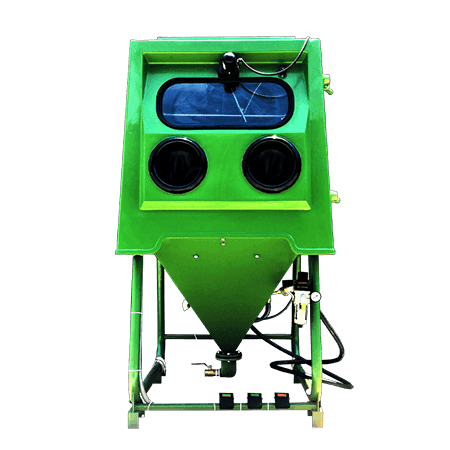
Height above turntable 730mm
Depth (front to rear) 900mm
Width 890mm
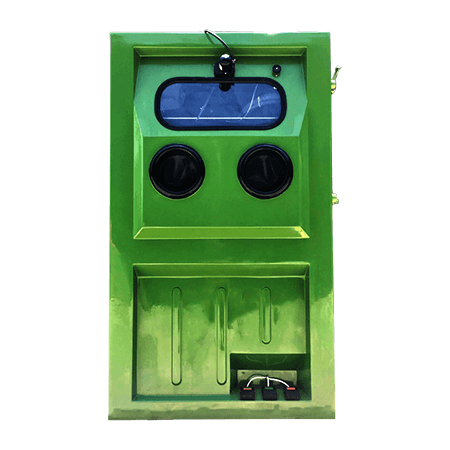
Height above turntable 920mm
Depth (front to rear) 1030mm
Width 1050mm
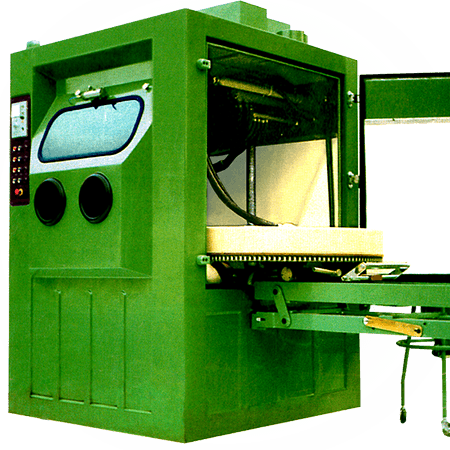
Height above turntable 1080mm
Depth (front to rear) 1660mm
Width 1500mm
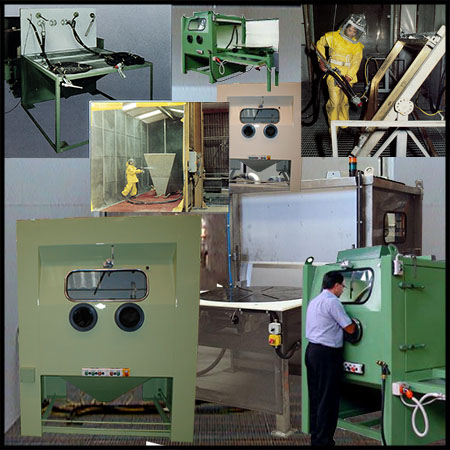
Varies
For a size comparison, click on the link below
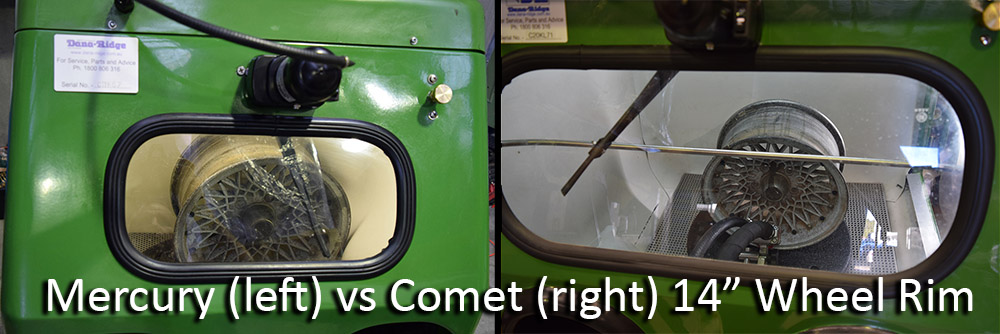
External cabinet size
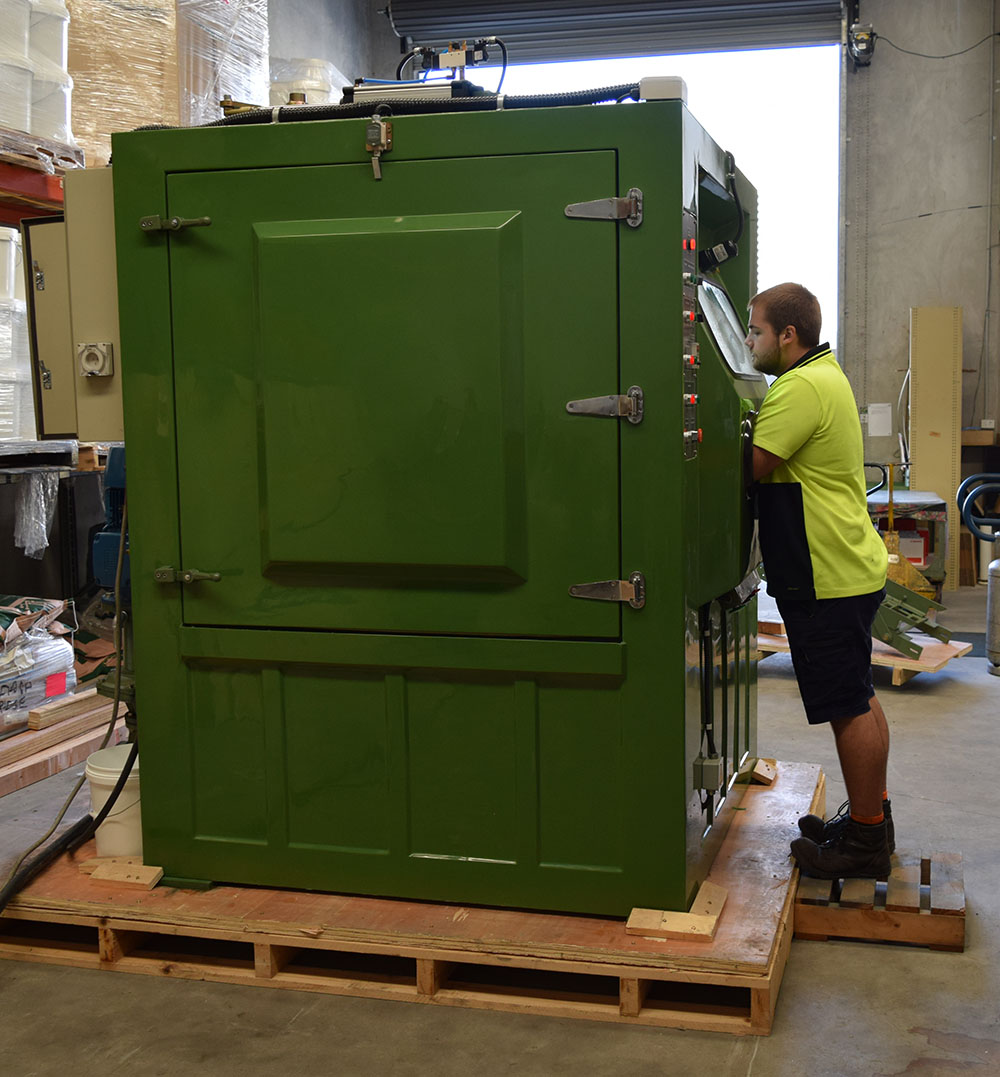
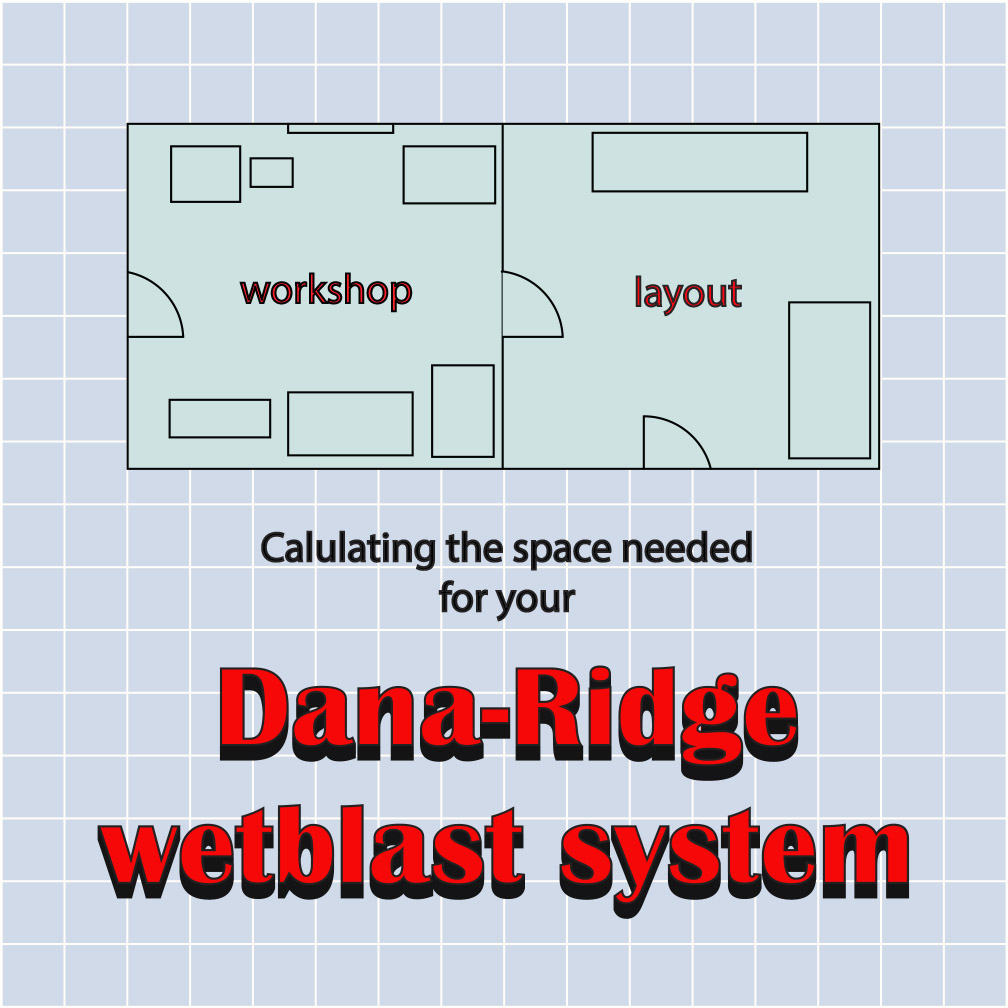
Make sure you have enough space in your workshop for the machine itself
Height 1760mm
Depth (incl pump) 1020mm
Width 910mm
Working height at gloves 1270mm
Height 1970mm
Depth (incl pump) 1230mm
Width (door closed) 1000mm
Width (door open) 1770mm
Working height at gloves 1230mm
Height 2040mm
Depth (incl pump) 1680mm
Width (door closed) 1160mm
Width (door open) 2000mm
Working height at gloves 1180mm
Height 2520mm
Depth (incl pump) 2120mm
Width (door closed) 1500mm
Width (door open) 2750mm
Loading height 960mm
Working height at gloves 1230mm
Varies
For more detail with diagrams please check out our blog post on the subject
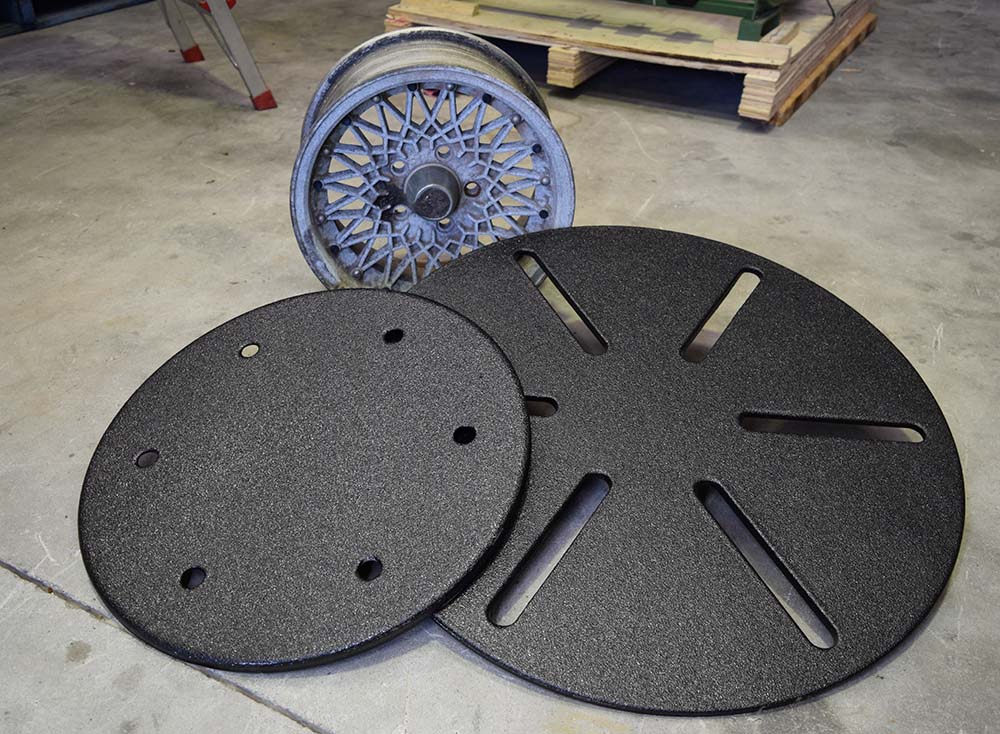
Turntable capacity
Turntable diameter 500mm
Weight limit 50kg evenly distributed
Manual operation
Turntable diameter 500mm
Weight limit 50kg evenly distributed
Manual operation
Turntable diameter 700mm
Weight limit 200kg evenly distributed
Manual operation (in standard configuration)
Turntable diameter 1250mm
Weight limit 750kg evenly distributed
Manual operation in base model (electrically operated in semi-automated version)
Varies
Pump Power
1.5kW 2-pole motor
240V, single phase 50Hz
1.5kW 2-pole motor
240V, single phase 50Hz
Also available in 415V 3-phase upon request
4kW 2-pole motor
415V 3-phase 50Hz
7.5/11kW 2-pole 2 speed motor
415V 3-phase 50Hz
415V, 3-phase 50Hz
To learn more about the electrical requirements of each machine please click on the link
Air supply
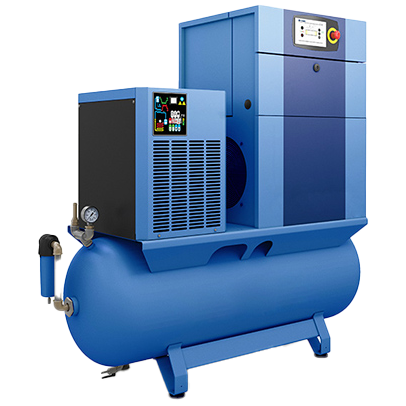
15-26CFM (425-736 LPM) of free air
18-30CFM (510-849 LPM) of free air
18-34CFM (510-963 LPM) of free air
40-60CFM (1,132-1,699 LPM) of free air delivery per process gun
40-60CFM (1,132-1,699 LPM) of free air delivery per process gun
To learn more about the compressed air requirements of each machine please click on the link
Water supply
The Dana-Ridge wetblast units recirculate water and abrasive around and around. There is however, some water used to lubricate the wiper blade on the viewing window and also when using the rinse gun to rinse off any remaining media after blasting. The standard machines tend to use a similar amount of water of roughly 24L per hour. This can be taken to near zero consumption through the use of the optional closed-loop system.
single or multi-gun
Single process gun only
Single process gun only
Single process gun as standard but pump is able to power more if desired
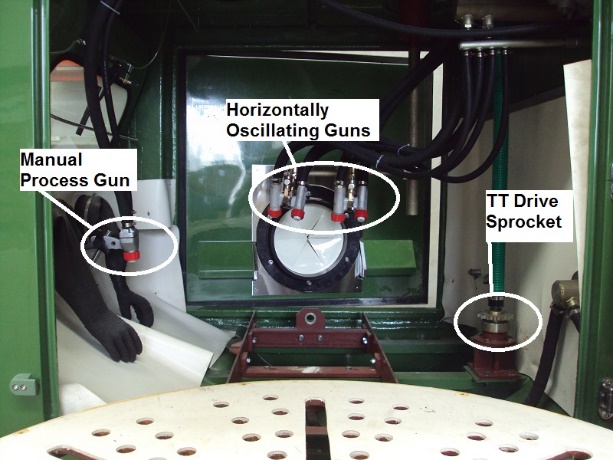
Single process gun as standard on the basic model. Semi-automated unit has 5 process guns
Varies
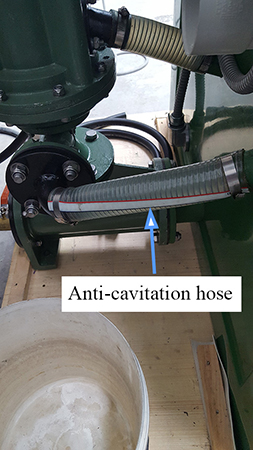
Anti cavitation feature


Larger machines have an anti-cavitation feature. It means that on initial start-up the pump will draw from the top of the sump before drawing from the bottom. This has several advantages. If the machine is overloaded by the operator with media, it will ensure the pump will not operate dry which could lead to pump failure. It also allows the pump to get the media flowing more efficiently on start-up. It is more forgiving in a workshop where the “attention to detail” is lacking or the new apprentice is let loose for the day.